






Unwinding the euro
From previous blogs (see here and here) you can see that we are not a big supporter of the single currency from an economic point of view. However we recognise the authorities’ political and economic desires to maintain it despite its economic inefficiencies. This does not stop us thinking about policymaker options. If the single currency is to be unwound what is the least damaging way to do it?
We have spoken before about the concept of the neuro being a successor currency to the euro. This is required to ensure a more orderly market can continue in financial and commercial contracts drawn up in euros, and to more fairly balance the outcome of the euro’s demise between savers and borrowers.
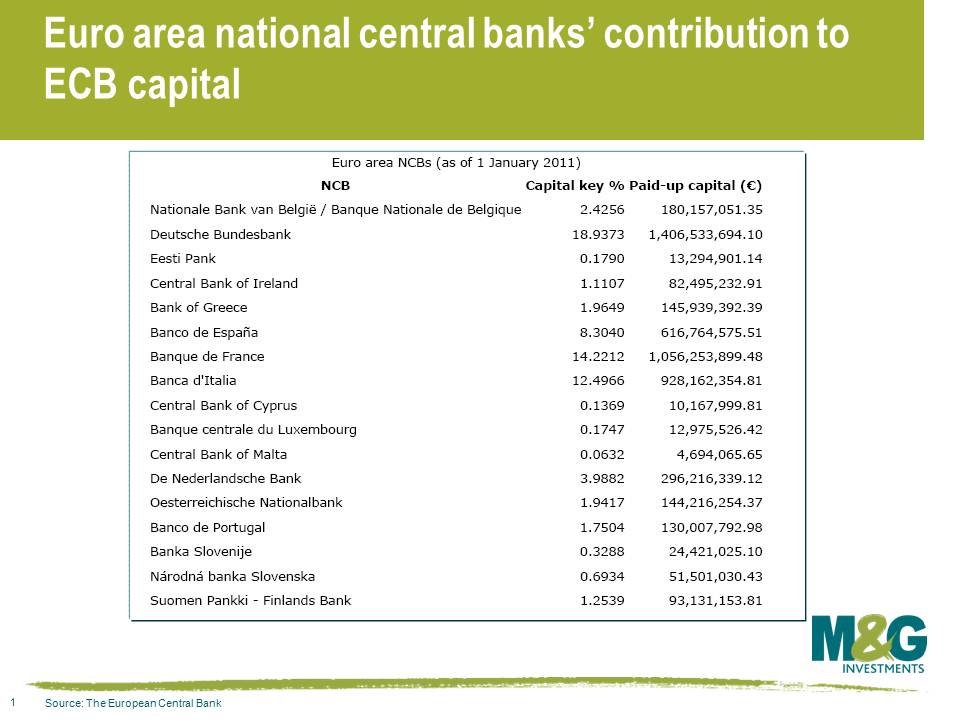
This neuro basket of currencies would succeed the euro in much the same way as the euro succeeded the ECU. The basket of currencies forming the neuro could be based on euro area nations’ contribution to ECB capital as per the table below.
The single currency vision is under huge stress, signalled by German board members defecting from the ECB, outside central bank governors like Mervyn King talking about unmentionable unmentionables, and comments from outside government officials like Geithner, and yesterday William Hague who said the euro is ‘a burning building with no exits’.
The authorities need to examine a plan b to at least mitigate the disaster that a disorderly introduction of national currencies would bring. The existence of the neuro as an alternative plan b, even if never enforced, would provide less downside than current thinking and so help market stability.
The value of investments will fluctuate, which will cause prices to fall as well as rise and you may not get back the original amount you invested. Past performance is not a guide to future performance.


17 years of comment
Discover historical blogs from our extensive archive with our Blast from the past feature. View the most popular blogs posted this month - 5, 10 or 15 years ago!

Bond Vigilantes
Get Bond Vigilantes updates straight to your inbox