oil
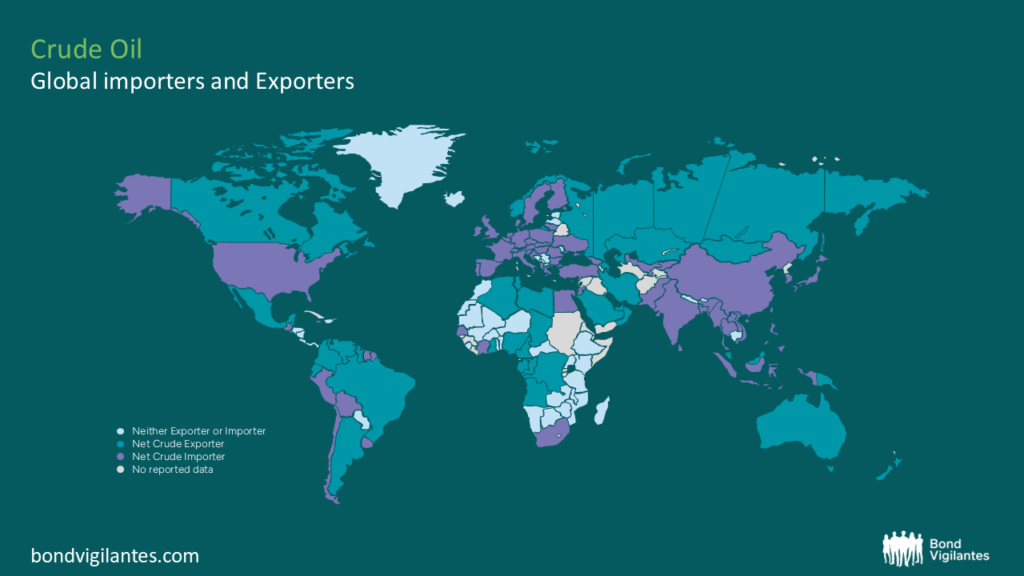
Not all oil-exporting countries are the cracking winners you think.
By Charles de Quinsonas
4 June 2026





The UK has a hung parliament, with Theresa May’s Conservative Party losing seats and likely ending up 8 short of an overall majority. It looks as if young people voted in large numbers, mainly for Jeremy Corbyn’s Labour Party. The Conservatives remain the single largest party however, and together with the Conservative-leaning DUP on 10 seats, they will likely form the new government. The Prime Minister is holding a press conference at 10am – it is possible that she resigns at that time. This is an extremely poor result for her personally, having gambled that another General Election would significantly boost her majority. For an election designed to deliver a “Strong and Stable” government, we face the possibility of a new Conservative Party leadership battle (perhaps beginning later today) and even another General Election later this year.
This renewed uncertainty seems likely to be unhelpful to the UK’s Brexit negotiations, due to start on 19th June. The Conservatives did especially badly in “Remain” constituencies. Perhaps this result therefore partly reflects a rejection of May’s assertion that “no deal is better than a bad deal”, and increases the chances of a softer Brexit (remaining in the Single Market), or even another referendum on the “deal” (which could be the price of Lib Dem political support in the new government, although pre-announcing a second referendum would perversely incentivise the EU to offer a poor deal to the UK in the hope of it being rejected). Finally, some good news for those fed up with election campaigns: the poor performance of the SNP in Scotland reduces the likelihood of a new Scottish independence referendum in the next few years.
Sterling has weakened overnight, but by only around 2% against the US dollar and euro. There’s been little bond market impact. At the margin there may be less austerity and fiscal tightening in future under a weakened Conservative Party, but there will be no significant rise in gilt issuance and the goal of reducing the UK’s debt/GDP over the next few years is likely to remain in place. Whilst Jeremy Corbyn’s Labour Party did much better than expected, markets don’t need to think about the prospects of nationalisation and significant changes to taxation and spending plans. The gilt market is not yet open, but is expected to start the day down very, very slightly. The US Treasury market was little changed in Asian trading – this is not a global risk off event. Corporate bond markets are a little weaker, with UK banks and insurance companies up to 5 bps wider in spreads. The iTraxx Main investment grade credit index is 0.5 bps wider. These are trivial moves.
The momentum of UK economic growth has been fading as we move through 2017. Retail sales growth, house prices and inflation adjusted incomes are all weakening in what remains a very consumption driven economy. This election result and the continued uncertainty it brings suggests that this trend continues. The Bank of England is not going to tighten policy for the foreseeable future – although there is also no likelihood of an “emergency rate cut/QE” of the sort we saw post the Brexit result last June.
With the UK’s vote for Brexit, Trump’s election, and the rise of Le Pen in France, it feels as if there is a backlash against the “Washington Consensus” and globalisation. Stephen King, economic adviser at HSBC has made this the topic of his latest book, “Grave New World: the end of globalisation, the return of history”.
In this short video, the latest in our series of interviews with authors of interesting books on economic themes, we discuss the reversal of trends that we’d started to take for granted, and ask what fills the vacuum if western institutions fall away.
You can also win one of five copies of Stephen King’s book by answering this question: in which year did China become a member of the World Trade Organisation (WTO)?
Enter via this link please bondteam@bondvigilantes.co.uk. (This competition is now closed to entries)
Entries closed at noon UK time on Wednesday 31 May 2017.
The results are in
The answer to the recent Bond Vigilantes competition question:
In which year did China become a member of the World Trade Organisation (WTO)? was 2001.
Congratulations to our five winners:
John McLaughlin – Brewin Dolphin
Adam McCormack – The Shaw Sheet
Niall Clifford – Mercer
Paul Boland – BCA Research
Neil Berry – East Riding of Yorkshire Pension Fund
Your prize of a copy of Stephen King’s book “Grave New World: the end of globalisation, the return of history” is on its way out to you.
I have to be honest here. Even though we sponsor it, whenever I go to the Chelsea Flower Show I am reminded of bleak Sundays being dragged around garden centres as a child, hoping there is at least a pets section with some rabbits or something in it. Or some swings. Nevertheless, many people love flowers and plants.
So, in support of CASCAID, the UK asset management industry’s effort to raise over a million pounds for Cancer Research UK, I’ve got hold of two gold dust tickets for the RHS Chelsea Flower Show on Wednesday 24th May 2017. These are especially rare and valuable as they are only available for members of the RHS on this date, and in any case sell out quickly.
It’s difficult to work out how to maximise the amount of cash we raise for Cancer Research UK. We could run a raffle or auction for the tickets, but that makes it tricky if we want people to increase the value of their giving through Gift Aid. So I’m going to simply rely on people’s goodwill and ask that if you enter the competition you might consider making a donation (a fiver? Tenner?) to the fantastic cause through my existing Cancer Research UK fund raising page. Whether you donate or not will honestly make no difference to your chances of winning. But karma.
To win the two tickets, valid from 8am to 8pm on Wednesday 24th May, please name the plant shown in the photo (chosen by our emerging market bond fund manager Claudia Calich who will be volunteering at the M&G garden at times during the show, so please go and say “hi”) and send the correct answer to bondteam@bondvigilantes.co.uk by midday UK time on Wednesday 17th May 2017. Good luck!
This competition is now closed.

Bond markets are behaving like the Trump reflation trade isn’t going to happen, whilst equities seem to believe in 4% GDP growth 4evah. Today I’m joined by M&G multi-asset fund manager and author Eric Lonergan to discuss Trump’s first hundred days in office, and to think about this seeming disconnect in asset valuations.
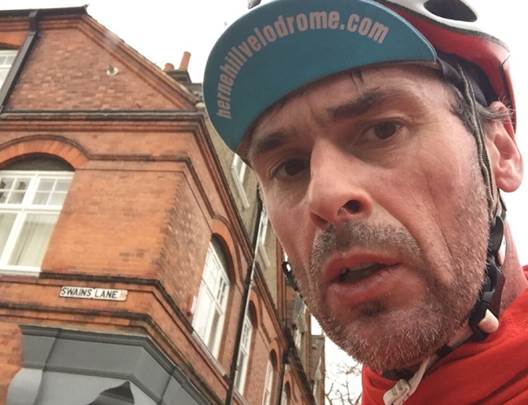
I’m three months into my attempt to climb 100 iconic hills, bergs, kops and mountains on my bike in 2017. So far I’ve ridden up 28 of them, mostly in torrential rain.
The purpose of all this is to raise money for Cancer Research UK, as part of the asset management industry’s goal of donating over £1 million to the great cause this year. So far we’ve collectively raised over £300,000 as part of CASCAID, through a wide variety of events and challenges. You can read about some of these efforts and the work of CASCAID and Cancer Research UK on the link below.
http://www.cascaidcharity.com/
As a reminder, I’m cycling up 100 famous climbs featured mainly in Simon Warren’s excellent series of books called things like “100 Greatest Cycling Climbs” and “Another 100 Greatest Cycling Climbs”. There’s also room for a few wildcards – hills not in any of the books but that are worthy contenders, for example The Peak in Hong Kong which I rode in January (in a rainstorm).
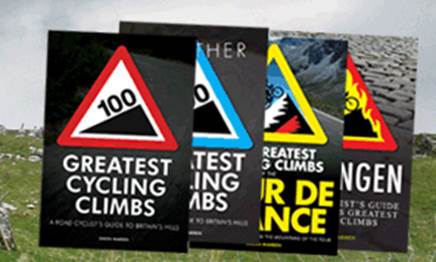
You’ll find the evidence of all the climbs on Strava, and here’s a list of all the twenty eight climbs that I’ve done so far:
What’s next?
Having ticked off most of the hills near to London, I’m going to have to get a bit more organised and plan some weekends in the Peak District, Yorkshire and the other hilly bits of the UK for the rest of the year. I have to ride up 2 hills per week to stay on track. I’m right on schedule now, but the low hanging fruit has gone. I’m also nervous that northern hills might be steeper and longer than our soft, southern hills. Having had some company and moral support from Ali, Jeff and Pete on a few rides so far (thanks!), I’ll be making sure I round up some company for the rest of the year. If any readers fancy tackling a hill or two with me, give me a shout. I’m hoping to ride the Cat and Fiddle climb near Macclesfield with M&G’s answer to Phillipe Gilbert, Chris Elliott, at the end of June (New Order are playing at the old Granada Studios that very evening, by some strange coincidence…).
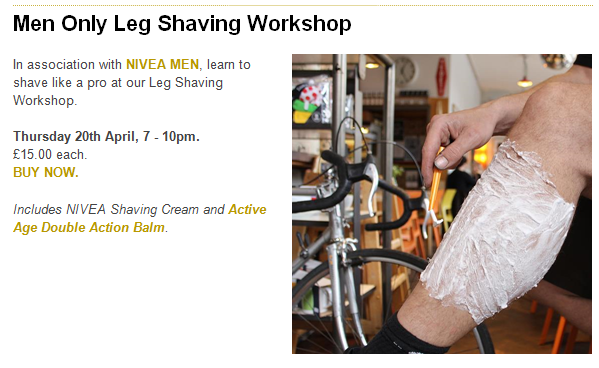
As a final incentive to donate, if I raise another £500 for Cancer Research UK, I will invest in the ultimate of “marginal gains” and shave my legs. Sadly I won’t be able to attend the workshop below at Look Mum No Hands, but if anyone has any “pro-tips”, let me know…
It’s rare to find a piece of writing that EVERYONE in bond markets has read and is talking about, but in January, a blog by Paul Schmelzing on the Bank of England’s excellent Bank Underground site did just that. Paul is a visiting scholar from Harvard University, working at the Bank of England to research foreign exchange policy in the era of Bretton Woods. In the blog however he took a very long view of eight hundred years of bull and bear markets in government/risk free bonds. You can read the blog here.
Paul came in to see us earlier this week to discuss three of the significant bond bear markets we’ve seen in the last 60 years or so, and to consider what the next bond bear market might look like once the “Volcker bull market” eventually comes to an end.
1. On the face of it, long term US Treasury yields are looking fair value, having traded on the dear side since the middle of 2014. Below is a chart you will have seen before on the blog as I’ve been using it for some time. It shows the relationship between the Fed’s long term expectations of short term interest rates (taken, with a pinch of salt, from the FOMC’s dot plots) and the bond market’s expectation of the 10 year US Treasury yield in 10 years’ time. In both cases, we are ignoring the immediate economic ups and downs, and even the possibility of an eight year Trump presidency.

Since the US election, the Treasury market has moved to price in a term premium of over 50 basis points and is arguably “cheap” compared to the median FOMC member’s long term Fed Funds expectation. Are there reasons why this simple model could be wrong? Of course there are. The term premium might not be sufficient, perhaps because of the “Chinese demand” factor I discuss below; and the FOMC and markets might significantly revise their expectations of the long term Fed Funds rate higher. After all, it’s come down from a median of 4.25% in 2012. If Trump is serious about a 4%+ real GDP target then it will head back there.
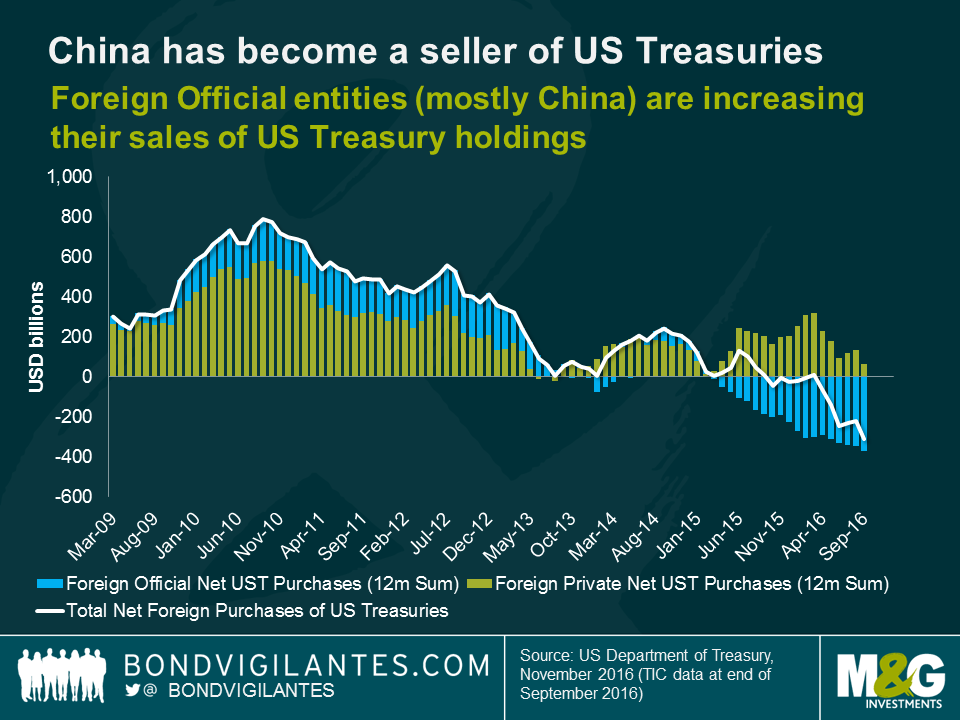
2. China joined the World Trade Organisation (WTO) at the end of 2001. Since then it’s accumulated, at peak, $4 trillion of foreign exchange reserves as a result of its trade earnings. Much of this ended up in the US Treasury market – China owns 20% of the market, with Japan owning another 20%. One estimate suggests that China’s purchases alone resulted in the 10 year Treasury yield trading 50 basis points lower than it otherwise would. However, the chart below shows that since the Chinese slowdown began in 2012, they have moved from being net buyers of US Treasuries, to net sellers. Additionally, since the start of 2016 foreigners as a whole have become net sellers of Treasuries. What was once a powerful tailwind for the Treasury market for the decade prior to 2016 has become a headwind. Perhaps a higher term premium is therefore appropriate.
3. Another headwind for US Treasuries is the cost for foreigners if they buy and hedge American bonds. Negative rates and ultra-low bond yields in Europe and Japan have left investors struggling to achieve yield targets (for example insurance company guarantees). On the face of it, a 2.5% 10 year US Treasury yield looks attractive if the alternative is a 0.5% yield on a 10 year German bund. Unfortunately, the weight of capital attempting to buy Treasuries out of Europe (and Japan) and then hedge the foreign exchange risk means that the “fx basis” (the supply and demand overlay to the fair value hedging cost assumption based on relative interest rates) is high. For Japanese investors the basis is -50 basis points and for Europeans it’s -35 basis points. This means that for a hedged investor in Japan the yield on the 10 year US Treasury is actually 0.55% and for Europeans it’s 0.46%. Whilst the negative basis isn’t as big as it was around the end of 2016 (-90 basis points for Japan and -60 basis points for Europe), it still doesn’t make sense for European investors to add to US Treasury positions in the hope of gaining a yield pick-up. Japanese investors now do achieve a premium once more, following the narrowing of its basis.
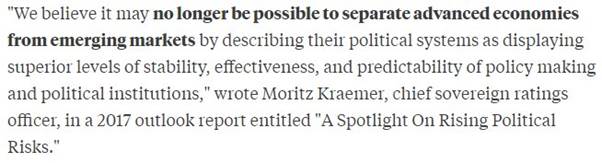
4. I didn’t spot this at the time (December), but Tracy Alloway of Bloomberg reminded me yesterday of S&P’s 2017 outlook piece by the excellent Moritz Kraemer. This quote from the document is chilling, if perhaps overdoing the collapse in the democratic and legal institutions that historically gave developed economies a ratings advantage over the emerging market nations.
5. I love a good “driverless cars” story. 94% of car accidents are caused by driver error. 32,000 lives are lost as a result in the US every year. 1 in 5 organ donations result from car accidents. If driverless cars are (presumably) better at driving than humans, then the shortage of donor organs is going to rise significantly. Another good “driving” story: for every 1% rise in unemployment US, 5000 fewer Americans die, as downturns keep especially dangerous drivers off the road. There is an obvious point that lower economic activity means that people drive (and can afford to drive) less. But the biggest decline in driving when growth slows, comes from the worst drivers. You can read some of theories in the article.
6. This National Institute of Economic and Social Research (NIESR) paper by Dr Monique Ebell is worth a read to understand the impacts on UK trade if we leave the single market. Dr Ebell estimates that the long term impact will be a fall in UK trade of up to 30%. The UK could experience an increase in trade with some countries – if the UK got a Free Trade Agreement with all of the BRICs then trade would rise by 2%, and an FTA with the Anglo-American economies would boost trade by just under 3%. Unfortunately, neither increase would make much of a dent in the drop in EU trade of 35%. Ouch.
7. The collapse in Trade Union membership continues, despite the rise in populism and rising anger at the weak income growth in the working and middle-classes in the developed world. Only 10.7% of Americans are union members, down from 11.1% two years ago, and 20% in the 1980s. The number of union members in the manufacturing industry has fallen by over 50% since 2000. Whilst I can see US wage growth hitting an annual rate of 3% later this year, it’s hard to see this becoming a sustained rise, especially in light of a relatively low participation rate in the US (compared with pre-GFC levels).
8. Duncan Weldon’s blog about The Second World War is good. Do we focus too much on the victory in battle, and not enough about how the UK won the peace?
9. China economist Michael Pettis is ace. Not only is he popping up at every economics conference I attend, anywhere in the world, but he’s popping out of my radio on a Sunday morning talking not about Chinese state-owned enterprises, but about the Chinese punk music scene. He asserted on BBC Radio 6 Music’s Mary-Anne Hobbs show that in a cultural history of the 21st century, Chinese alternative music of a decade ago will be one of the most significant movements. I’m sceptical, but UK readers can make up their own minds and “listen again” through the link above.
10. My favourite book to come out of the Great Financial Crisis was “This Time is Different” by Carmen Reinhart and Ken Rogoff. The authors demonstrated that nations which saw public debt to GDP ratios near 100% experienced significant growth slowdowns. There was some great economic history in a very readable book. I have started wondering though, in a world where growth has been sub-par for most of the developed world, whether this book was responsible for an “austerity meme” which has caused big damage to the global economy (and the subsequent political instability). We know that Keynesian responses to a demand shortfall work (discuss…) – so did this book result in the opposite happening in the UK under Osborne, or in Europe where Germany is running budget surpluses? How important was it in helping to create the low growth world that we’re now in?
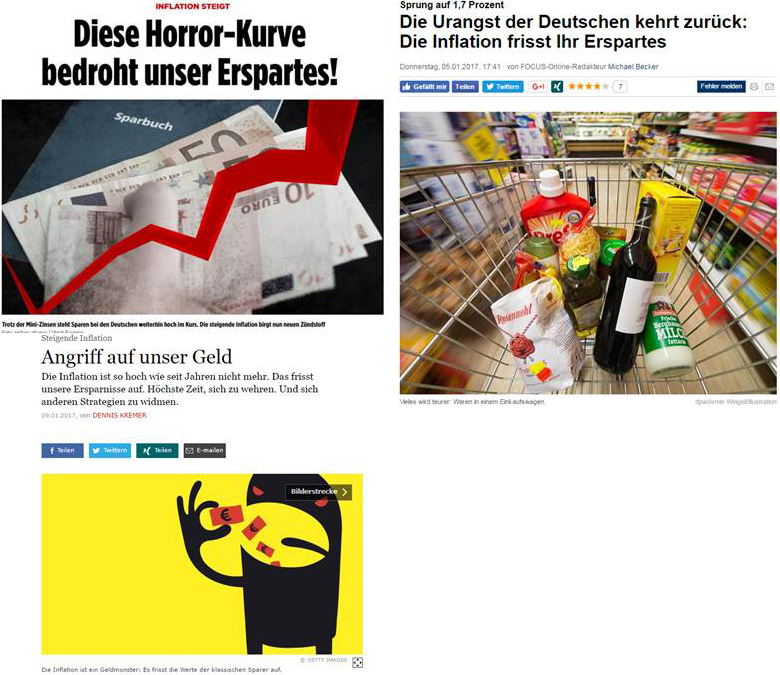
11. Talking of Germany, here are some newspaper articles from the past few weeks (Bild, Focus, FAZ) about German inflation edging back towards 2%. They are worried…
12. Finally, I’m in no way blaming our new(ish) CEO Anne Richards for the death of the weasel in the Cern Large Hadron Collider. It looks as if Anne left Cern before the stone marten was slayed with accelerating particles. Anyway, the stuffed Cern weasel is now available to be gawped at in Rotterdam if you want to see it. I am however staying away from all large electrical devices in M&G HQ for the foreseeable future. This included my Bloomberg terminal for two days last week when a vicious papercut and battlefield dressing (a plaster) meant that I was unable to get past fingerprint authentication…I had a great two days.

Before we get to the main event, I’d like to thank everybody who has made a donation to Cancer Research UK as a result of our 10th birthday celebrations. We are over the £10,000 mark now. We still have one box of our second Bond Vigilantes book left. If you’d like a copy, send your name and address to us at bondteam@bondvigilantes.co.uk and we will send them out on a first come, first served basis. And if you want good karma for the whole of 2017 you could also add a few quid to our Just Giving page. Thanks in advance!
https://www.justgiving.com/fundraising/bond-vigilantes-anniversary-book
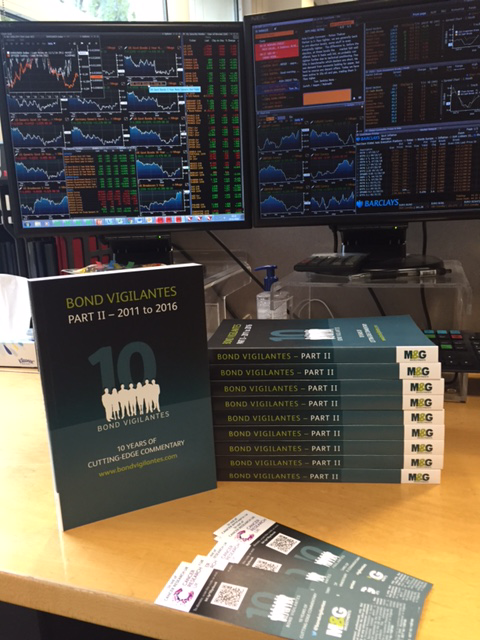
Thanks very much for another bumper stack of entries to the annual Christmas quiz. This year’s winner, and new reigning champion is Francis Sutch of Julius Baer International Limited. Congratulations, we will be in touch to see where you’d like the £100 charity donation to go. You also win the new Bond Vigilantes book, called “Bond Vigilantes – Part II”. Second prize of two copies of the Bond Vigilantes book goes to Jake Lewis of Morgan Stanley.
1. What is permanently positioned to wipe out Scratchwood service station on the M1 should the need ever arise?
The guns of HMS Belfast on the Thames are pointed to achieve a direct hit on Scratchwood services.
2. Which popular pub name marks the boundaries of the ancient Soho hunting grounds in London?
The Blue Posts. There are three in Soho, one in St James and one in Fitzrovia, with another couple having closed down according to the Londonist website. Allegedly the royal hunting grounds of Soho were marked out by blue posts and pubs sprung up around the edges.
3. How far did it go? This is Bradley Wiggins’s hour record bike.
He rode 54.526 km around the Lee Valley velodrome in 2015 for a new record. It would have been further had there not been especially high air pressure that day.

4. Where might you catch instinct, valour and mystic?
Well if you got this, well done because I wrote mythic rather than mystic. These are all to be found in Pokemon Go. And they are the teams rather than what you catch. Maybe you catch them too? Who knows. Rubbish question, I hang my head in shame.
5. For the first time in four decades, nobody went up what in 2015?
Nobody made the summit of Everest, in part due to an earthquake which triggered an avalanche at Base Camp.
6. This place closed last year. Why?
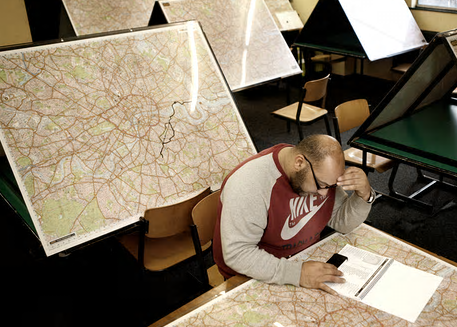
It is one of the London taxi “knowledge” schools where black cab drivers learn the routes around the capital. Uber has meant that numbers enrolling for the gruelling process has collapsed, and this school closed.
7. What is one crore multiplied by one lakh in the Indian system (give answer in international figures please)?
One crore = 10,000,000. One lakh = 100,000. Answer is therefore 1,000,000,000,000.
8. Another pub question. This titled veteran of the Seven Years’ War is said to have given his troops help in buying public houses once they left his command, and they often named their pubs after him. Who?
John Manners, better known as the Marquis of Granby.
9. He didn’t know how the third world war would be fought, but he knew the fourth would be fought with bows and arrows.Who?
Well he actually said sticks and stones, but the answer was Albert Einstein.
10. Where is this recent photo from?
Pluto, from NASA’s New Horizons mission.

11. What’s the most rectangular US state?There’s no purely rectangular state, partly because of the small errors and kinks caused by surveyors when the state markers were laid out.
Wyoming and Colorado come closest, but both are trapezoids rather than pure rectangles thanks to the method of transfering lines on a flat map onto the curved earth.
12. What was the most used hashtag on Twitter in 2016?
#Rio2016
13. Who was the world’s highest paid musician in 2016?
Taylor Swift, earning $170 million.
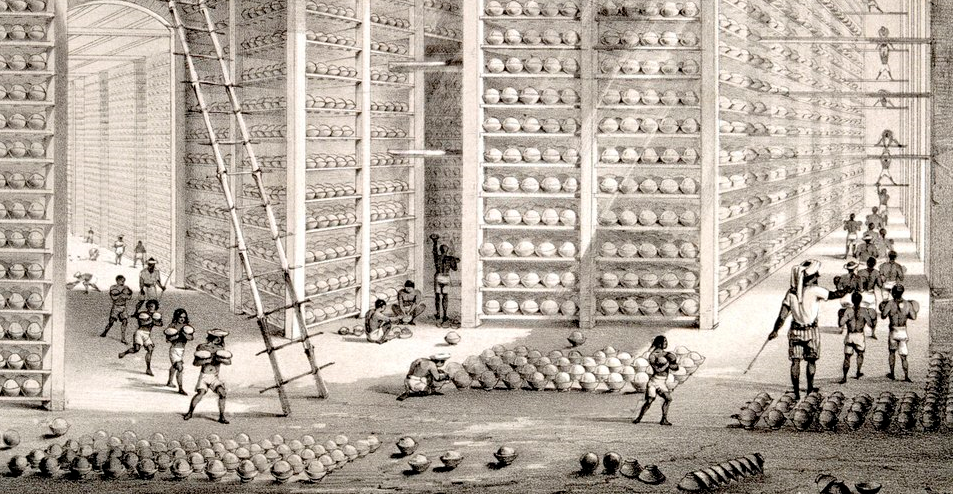
14. This is the East India Company’s storage room in Patna in 1850. What’s being stored?
Opium.
15. Which road runs the entire length of Manhattan and dates to the first Dutch settlement?
Broadway.
16. Its name very roughly translates to Milky Way 2 in English, and it is the fastest in the world (almost twice as fast as Titan in the US). What is it?
It’s a Chinese supercomputer, Tianhe-2.
17. Whose tattoos?
David Beckham.

18. Whose tattoos?
Amy Winehouse.
19. Whose tattoos?
Mike Tyson.

20. According to the census of which year, when did the number of British people living in towns and cities exceed those living in the countryside?
1851.
Thanks as always for taking part, and have a great 2017.
What it says above.
Here is the 10th annual Christmas Quiz. 20 questions, and the closing date for entries is midday on Friday 23rd December. Please email your answers to us at bondteam@bondvigilantes.co.uk. The winner will get glory, and can choose a charity from our approved list to which we will donate £100. She or he will also get a copy of the new Bond Vigilantes book, called “Bond Vigilantes – Part II”. Second prize is two copies of the Bond Vigilantes book.
Good luck! Conditions of entry are down below somewhere.

This competition is now closed.


Sign up to the Bond Vigilantes mailing list to ensure you never miss a great article from our expert Bloggers. We will email all new articles to your inbox, meaning you can stay on top of the world of Bonds.
I confirm that I would like to receive information about Bond Vigilantes and products and services from M&G Securities Limited.
We will use the email address and personal data you have shared with us to send you this information. For existing customers, submitting your contact details and requesting to receive this information from us, will replace any earlier choices you have made in respect of marketing information.
You can unsubscribe from marketing at any time, at which point we will not send any further marketing information to you, by selecting the unsubscribe link in all communications.