richard_woolnough_100

The King speech

Today is the last inflation report for Mervyn King, Governor of the Bank of England. He has served the bank for many years and has been the key figure at the bank for the past eight years.

King’s abdication (retirement) is a time to reflect on his achievements at the top. A keen football fan who happily uses soccer analogies, King would probably recognise his time as Governor has been a game of two halves.

The first half was great, with no apparent need to interfere with a perfectly balanced, strong growth, low inflation economy. The second half involved a great deal of stress and the need for intervention as the economy was weak, the inflation target was constantly missed, and he faced the financial equivalent of Chernobyl, as the banking sector began to meltdown.

King is not only a football fan but is also a regular sight at Wimbledon. Rudyard Kipling’s poem ‘If’ is the guide to how players should play on its perfect English grass courts. It is fair to say that King has appropriately treated success and failure in the same way.  I would argue that his failures were in the first half of his term and his strength and ability shone through in the second half of his term. Although his critics may say that the seeds of the financial crisis were sown under his watch.

I think the seeds of the UK financial crisis were as follows:

Inappropriately low interest rates in the USA following the tragic events of September the 11th.

The removal of bank supervision from the Bank of England by Gordon Brown.

The need to hit a rigid inflation target when the world was enjoying low inflation because of world trade and productivity growth meant the use of over stimulative policy, causing a boom to keep inflation on target.

The euro creation resulted in an unstable financial system in Europe.

The first three of these have been resolved with the passage of time, a change in UK banking regulation back to the old ways, and a move around the world to more flexible inflation targeting. The last – the issue of banking in the eurozone – remains unresolved, but there are strong signs that potentially successful attempts are underway to solve the dichotomy of banking support from sovereign states within the eurozone.

We are avid watches of the inflation reports, and will be watching it today. The journalists get to ask questions. If I was there these are the three I would like to ask:

1. What do you think of the euro as an economic concept?

2. How close were we to financial Armageddon?

3. How does QE work?!

Sadly I think Mervyn will be as discreet as always in the press conference. Let’s hope that when he is allowed to speak freely, we get to see a little less candour and more transparency and insight into what has been an exciting time to be at the bank.

I think history will show that Mervyn King did a good job in handling the crisis. After all, that’s what central banks were created to do as lenders of last resort. From an economist’s point of view, what does his leadership prove? Well, Goodhart’s law was again proving itself to be correct. You aim to be a boring central banker and look what happens!

matt_russell_100

Funding for Lending – has the scheme achieved its goals?

As has been widely reported, last week the Bank of England and HM Treasury extended their Funding for Lending Scheme (FLS). The FLS was originally launched in July last year with the intention of stimulating lending in the real (non-financial) economy. Under this scheme a bank or building society borrows UK Treasury Bills and hands over eligible assets as collateral. The fee they are charged (effectively the interest rate) and the amount they can borrow are determined by how much they have increased their lending. The bank or building society can then either repo their T-Bills for cash or, more cheaply/likely, just use them to replace cash in their liquidity buffer. The more they lend the more they can borrow at the lower rate.

The BoE and HM Treasury have hailed the scheme as a success. But on what measure?

Today we received news that mortgage approvals had another weak month in March, increasing only slightly to 53,500. Mortgage approvals have been flat at around 50,000 per month since early 2010 and, considering last week’s extension to the programme incentivises SME lending more, it doesn’t look like the cheaper funding has spurred the desired increase in lending.

UK mortgage approvals chart

Further, with the average mortgage rate in the UK at around 4% and banks able to borrow at what the Bank of England estimates to be 0.75%, the lower rates clearly aren’t being passed on to the man on the street either. Assuming banks’ net interest margins aren’t the measure on which this programme is judged I think it’s fair to say it hasn’t been a huge success.

Unless that is, you happen to be an investor in asset backed securities. The UK Residential Mortgage Backed Securities (RMBS) market has rallied significantly since the FLS was first announced. Granted, most risk assets have rallied since last summer – partly down to Mario Draghi’s now famous speech – but I think that the UK RMBS sector has had an extra boost from the FLS.

Rather than issue RMBS, the banks and building societies have preferred to pledge their mortgage stock with the FLS which has provided a technical support for the market. The graph below shows the spread on an index of short dated, AAA, UK prime mortgage deals. As you can see they began their rally last summer and have been hovering around 50bps since the autumn. The lack of supply – we haven’t had a new public deal since last November – has certainly been supportive for spreads.

UK Prime RMBS chart

The Bank of England and the Treasury claim that the scheme has been a success mainly on the grounds that things would have been worse without it. Clearly we’ll never know. Whether things are better or not the FLS appears to have done almost exactly the opposite of what it set out to do. It was established to provide support to the non-financial sector, but as far as I can tell, to date it has actually made the financial sector marginally healthier and better off.


This entry was posted in banks and tagged , by . Bookmark the permalink.

Please note the content on this website is for Investment Professionals only and should be shared responsibly. No other persons should rely on the information contained within this website.

richard_woolnough_100

Old Lady sells her bonds

Back in 2009 the Bank of England (the Old Lady of Threadneedle Street) began buying a portfolio of investment grade bonds to provide funding to UK corporates, to aid liquidity in the corporate bond market and to supplement their QE purchases of gilts. Last Friday this investor sold its last corporate bonds.

This has been a great success from a profit point of view. The attached chart shows the total return of an index of non-financial corporate bonds over the period of the bank’s purchases and sales as well as an indication of their total holdings.

I believe its actions helped stabilise the corporate bond market in the UK by providing a backstop bid, therefore helping to reduce the cost of funding at the margin for issuers, and would have added to the effects of QE. However, empirically measuring these effects is hard to do – corporate bond markets that experienced no domestic support from their central banks appear to have performed similarly, and the debate on the true effectiveness of QE remains.

What is the primary lesson we have learned? I think it is that state intervention can work where markets are priced inefficiently. This is illustrated by the large profits the bank has made by buying an out of favour asset class from the private sector. It is probably a good base to have the state intervene where markets are inefficient, for example in areas such as healthcare, defence, law and order, and infrastructure. The danger comes when the state interferes to the detriment of an efficient market. From an economic point of view, aggressive trade barriers are the first thing that comes to mind where there would be a great deal of consensus from the left and right side of politics. Other actions may depend on your economic or political view. The best current example of this is the single European currency experiment. Does it aid a free market via price transparency and low transaction costs, or does it hinder efficiency by having one single interest rate and exchange rate for such diverse economies ?

The Old Lady’s portfolio of corporates has served her and the UK well because she bought them at cheap levels from distressed sellers. Unfortunately, this investor has a significantly bigger portfolio of gilts. The carry and mark to market on these looks great. However, turning this unrealised gain into a realised profit still remains a challenge. If she comes to sell, her position is likely to drive the market against her.

old lady blog chart

richard_woolnough_100

Monetary policy and the electoral cycle

When deciding economic policy, the buck, so to speak, is left with a combination of the chancellor and the Bank of England. This arrangement exists as politicians should have the final say in a modern democracy, but a modern democracy needs to have a brake on populist politicians, hence an independent central bank.

Today those worlds publicly collide, with Mark Carney, the next governor of the Bank of England, appearing in front of the Treasury Select Committee. This will hopefully give the markets and politicians a flavour of his approach to dilemmas the Bank of England currently faces given the UK’s current economic malaise. What kind of policy will Carney follow? Is he a natural dove or a hawk?

Well at a guess, he has been appointed by a chancellor who wants economic recovery for the benefit of the country, and from a political point of view, an economic recovery that will keep him and his party in power. It would therefore be fair to assume that when interviewing for the position, any respected German central bankers’ applications would have been put straight in the bin.

One can therefore assume that Carney has been chosen to reflect the need at this point of the electoral cycle for a bit of an economic boost. Indeed, yesterday Osborne was calling for a more dovish stance from the Bank of England.

Politicians in the UK have played loose with fiscal and monetary policy over the years. Did we join the ERM in 1990 to drop interest rates to help the conservatives retain power in 1992? A tightening of monetary policy by the creation of an inflation targeting Bank of England in 1997 aligned the economy to the electoral cycle in Tony Blair’s first term. The amendment of the CPI target by Gordon Brown in 2003 brought a handy monetary stimulus ahead of the 2005 election. Given the election is a couple of years away and monetary policy works with a general lag of 18 months, what is the chancellor to do two years ahead of the election this time?

It is an ideal time for him to meddle with monetary policy. With the changing of the guard at the Bank of England he will be able to liaise with a new governor to undertake reforms to make the economy work better, and therefore increase the chance of re-election. The simplest way to boost the economy in the short term is to change the inflation target. This can be explicit, or disguised amongst the current statistical reform of RPI and CPI measures.

The surprise for the markets over the next year could well be a combination of a flat economy encouraging a politically motivated chancellor, and a new central bank head keen to make an impression in his new job, working together to engineer higher growth and higher inflation via an explicit loosening of the inflationary target in the UK.

jim_leaviss_100

Do Central Banks tell us too much for our own good?

I read in The Times last week that the Shadow Monetary Policy Committee (a panel of economists and Bank of England alumni) thinks that the Bank of England should announce a freeze on UK rates for an extended period of time. The Federal Reserve also had this policy (now replaced by even more explicit guidance about the unemployment rate and inflation levels), as did the Bank of Canada. In the past few years the Fed has spent weeks debating its communications strategy. Elsewhere we get monthly press conferences (including in Trichet’s time as head of the ECB the use of the explicit codewords “strong vigilance” which meant “rates going up next month”). We also get Inflation Reports and Financial Stability Reports, fan charts and GDP forecasts from which market economists pronounce that the Bank’s two year ahead projection means no more QE just yet. I wonder though whether we’re being given too much information, and that in telling us exactly what they are going to do, central banks risk either a) having to not change their policy even if economic circumstances mean that they should (for example if economic growth comes back strongly yet they’ve promised to keep rates on hold for years), or b) lose face, credibility and trust with the market by going back on their promise. Each of these actions has a cost, and should lower an economy’s potential GDP rate.

Is the promise of low rates forever fuelling the return of those Four Horsemen of the Bondocalypse – CLOs, PIK notes, CCC rated high yield issuance, and mega – LBOs? Does it lead to complacency in investment? To schemes that can only survive if rates don’t ever rise? Is current central bank policy generating asset bubbles? And what are central bankers left with, without the ability to surprise and shock? Worse still, what if “low rates forever” has the opposite effect than intended? Does it say “doomed, we’re all doomed”? Perhaps central bankers should realise that keeping us guessing is their most powerful tool (OK maybe QE Infinity is their most powerful tool, but still).

The clip below is of Diego Maradona, scoring against England in the Mexico World Cup finals in 1986.

I was reminded of it when I picked up a copy of Steve Hodge’s autobiography The Man With Maradona’s Shirt in the sales. Maradona was fortunate enough to swap shirts with Nottingham Forest legend Hodge after that game. Anyway, back in 2005 Bank of England Governor gave a speech in which he said the most interesting thing a central banker ever said.

“The great Argentine footballer, Diego Maradona, is not usually associated with the theory of monetary policy. But his performance against England in the World Cup in Mexico City in June 1986 when he scored twice is a perfect illustration of my point. Maradona’s first “hand of God” goal was an exercise of the old “mystery and mystique” approach to central banking. His action was unexpected, time-inconsistent and against the rules. He was lucky to get away with it. His second goal, however, was an example of the power of expectations in the modern theory of interest rates. Maradona ran 60 yards from inside his own half beating five players before placing the ball in the English goal. The truly remarkable thing, however, is that, Maradona ran virtually in a straight line. How can you beat five players by running in a straight line? The answer is that the English defenders reacted to what they expected Maradona to do. Because they expected Maradona to move either left or right, he was able to go straight on. ”

If Maradona had put out a press release and a booklet explaining exactly what he was going to do, it could never have happened. But by keeping the England team guessing and by shifting his weight from left to right (the footballing equivalent of raised eyebrows) he scored the greatest goal of all time.

anthony_doyle_100

Jim’s outlook for 2013. Eurozone volatility, poor emerging market debt valuations and a sterling collapse. Merry Christmas!

It may not have felt like it, but 2012 has actually been a pretty good year for investors. Bond holders in particular have had a decent 12 months: the government bond bull run has continued and investment grade and high yield corporate debt appears on track to deliver some excellent returns. Major equity markets also look likely to end the year in the black.

These broad-based gains on global stock and bond markets have occurred against a still challenging macroeconomic backdrop. In fact, looking back at our last annual outlook, many of the things we were worried about then – “double dips” and rising indebtedness in developed countries and the risk of a significant policy error worldwide – have not only remained unresolved but have become, in some cases, more of a concern. But it’s not all bad news and we’re pleased to note pockets of progress in some parts of the world.

So what does 2013 have in store for financial markets? In our latest Panoramic outlook, Jim outlines his macroeconomic and market forecasts for the year ahead. And remember, there are still a couple of days left to enter the M&G Bond Vigilantes Christmas quiz for 2012.

Enjoy!

jim_leaviss_100

Central Bank Regime Change: an update following the Fed last night, and Carney the day before

Last night’s move by the Federal Reserve to change its approach to US monetary policy to effectively reduce the focus on the inflation target was just the latest step in an accelerating project by the world’s monetary authorities.   In a world where unemployment rates are well above pretty much anyone’s estimate of the natural rate, and in many geographies well above 10%, the need for growth is seen as much more pressing that the fear of missing the 2% inflation targets.  So at the latest FOMC meeting the Fed decided that inflation would be tolerated if it nudged higher to 2.5% as long as unemployment remained too high (above 6.5%).  You can read the text of the Fed’s statement here.

We call this move by the world’s authorities away from the old idea of 2% inflation targets Central Bank Regime Change.  We wrote this blog about it in March. The chart is worth showing again.

central bank regime change

The chart from the IMF shows us that in the period post Paul Volcker’s appointment to the US Fed in 1979 (the orange line), the monetary authorities kept interest rates higher than the rate of inflation (they were reacting to the damage that inflation caused in the 1970s).  As a result inflation steadily fell – and as well as high “real” rates, the rhetoric was all about inflation (inflation targets, the Bank of England’s Inflation Report, independent central banks).  It’s been an awesome 30 years (on the whole!) to be a government bond investor, as yields fell in response to inflation fighting credibility.  However, I’ve added another line to the IMF chart (blue), showing how central banks have behaved since Lehman went bust, and the credit crisis was followed by the sovereign debt crisis.  It’s a very different story, with sharply negative real yields.  Nominal interest rates are near zero in much of the developed world, yet inflation has been sticky above 2%.  This is deliberate central bank policy – negative real rates are designed to make it attractive to borrow to invest and stimulate growth (and to deliver gains to indebted consumers), and also to encourage risk taking as investors reach for yield (government bond investors buy credit, investment grade investors buy high yield etc.).

Negative real rates also have an impact which we’ll discuss in more detail another time – debt reduction for bust governments.  There are a few ways to reduce debt burdens:  strong real growth (seems out of reach for the foreseeable future), austerity (unproven and probably counter-productive, although some point to Canada and Sweden as success stories), default (will be necessary for some Eurozone economies without their own currency to depreciate) and inflation.  It’s the last that’s likely to be effective – and as the red line on that chart shows, it’s the method by which the western economies reduced the war debts following WWII.

So whilst we don’t believe the world’s central bankers and finance ministers are sitting high in some Swiss cable car complex, stroking white fluffy cats and cackling maniacally, plotting to generate super high levels of inflation, this is becoming the pragmatic (only?) response to a world without other policy responses (no fiscal flexibility left).  Now the Fed’s latest move to target both inflation AND unemployment rates is very interesting – when I was a young student of economics, the idea that you could chose BETWEEN inflation and unemployment was discredited.   To quote, er, Wikipedia on that idea, known as the Philips Curve “while it has been observed that there is a stable short run tradeoff between unemployment and inflation, this has not been observed in the long run”.  So the idea that you can choose both is probably even more far fetched.

Anyway, what does the Fed’s action mean?  Well watching Bernanke’s press conference last night it struck me that in changing the Fed’s guidance away from the “no hikes until 2015” towards the unemployment and inflation numerical targets should actually be seen as a potential monetary TIGHTENING.  After all, we are exceptionally bullish on US housing as a driver for growth in 2013 and 2014, so if things go well we could end up with the Fed raising rates ahead of the old 2015 date.

So I’ve asserted that Central Bank Regime change is taking place, but I thought it would be worthwhile to put together a brief list of the evidence so far.  Here it is.

Evidence for Central Bank Regime Change

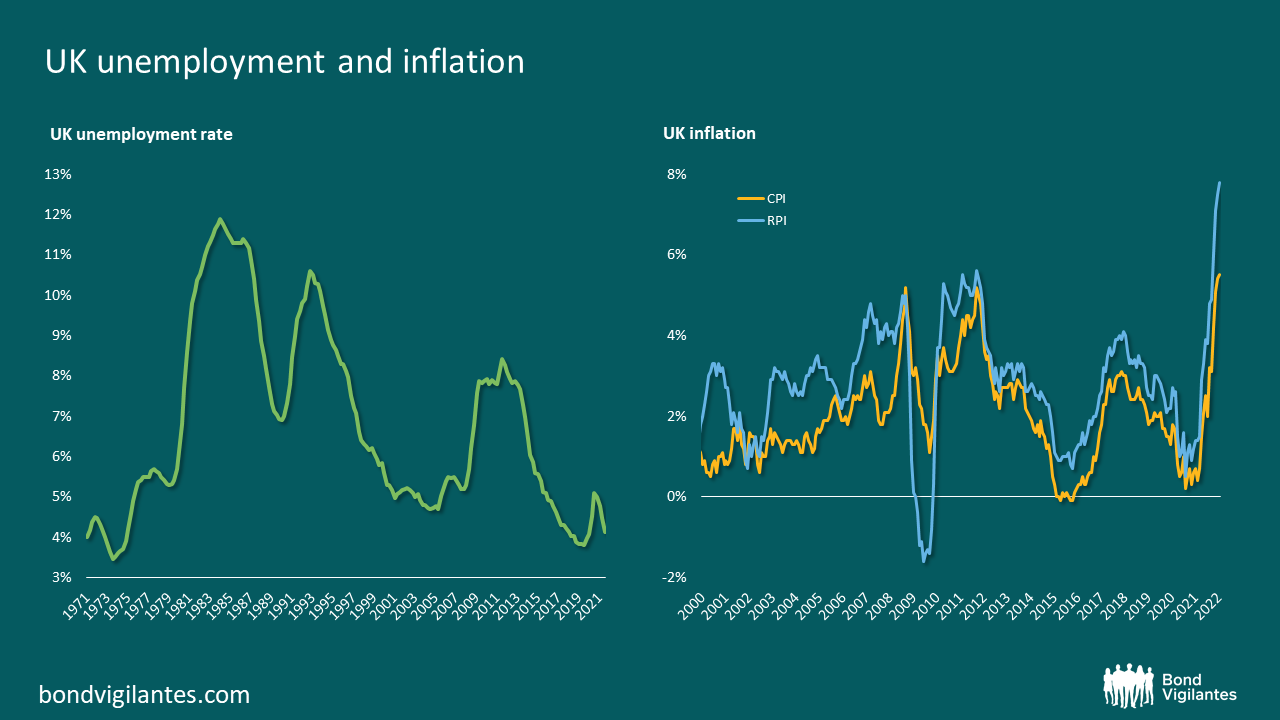
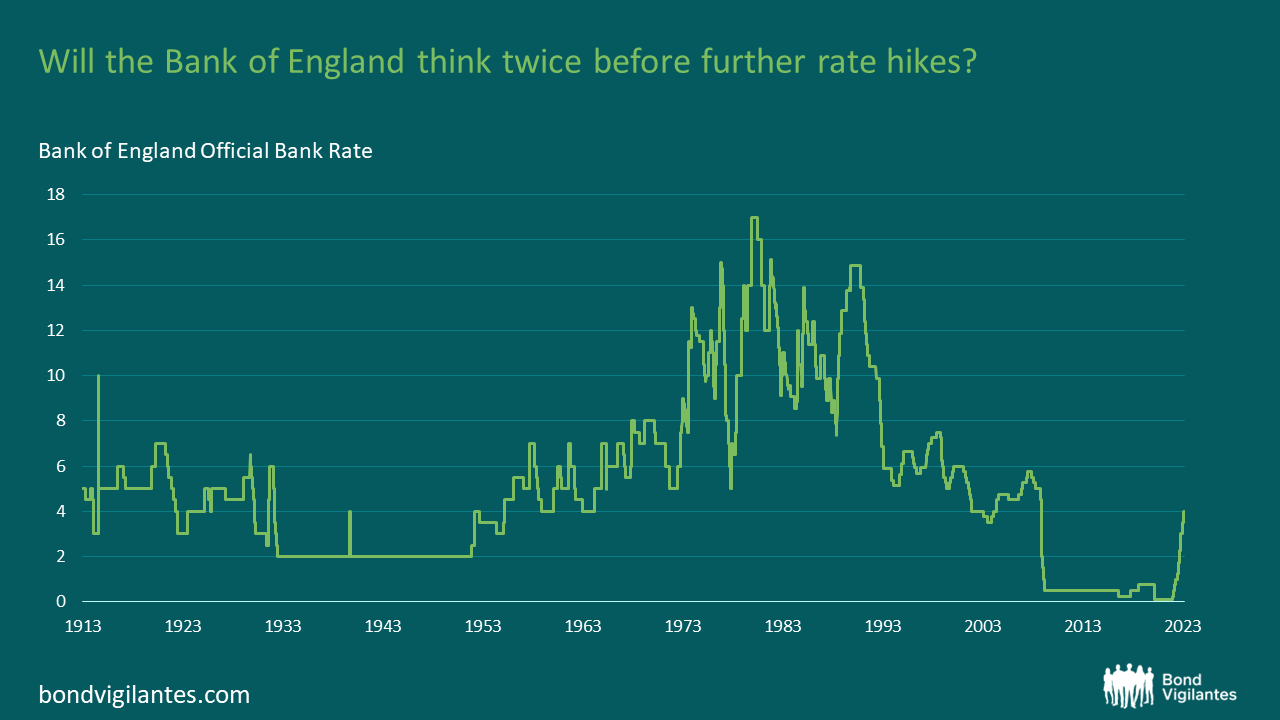
  1. The level of real rates set by the Central Banks: the best evidence is obviously shown on the graph itself.  Are central bankers hitting inflation targets?  Not really – for example the Bank of England has only had CPI at or below the 2% target for 6 months in the last 5 years, and for much of that period it’s been above 3% (and above 5% at one point!).  On latest data the UK, the Eurozone and the US all have negative real rates of 1.75% or higher.  Western central banks are even considering setting negative NOMINAL interest rates.  Only Japan of the major economies has positive real rates at the moment – although we think this might change dramatically, as I’ll discuss below.
  2. The US refocus on the dual mandate: after three decades of inflation targeting, the Fed has been moving towards this new objective for a year or so now.  First Charles Evans of the Chicago Fed started floating the concept of an unemployment target, then Janet Yellan (Bernanke’s probable successor) of the San Francisco Fed joined him, leading up to last night’s actions.  This was pushing on an open door for Ben Bernanke who has written the following in his previous academic life…
  3. Bernanke’s 4% inflation target for Japan:  in this paper, Japanese Monetary Policy: A Case of Self-Induced Paralysis, written whilst he was at Princeton in 1999, Bernanke argues that the solution for an economy like Japan with a burst property bubble, broken banks, sluggish growth and deflationary pressures should be to target inflation of between 3% and 4%.  Looks similar to the US situation, so why wouldn’t Bernanke think that this is the correct response from the Fed for the US?
  4. Mervyn King’s softening stance on the inflation target:  I guess actions speak louder than words, and the lack of actual inflation targeting in the UK for the last 5 years should tell you more than any speech, but I’d never heard the Governor soften his rhetoric until these words in this speech Twenty Years of Inflation Targeting this October.  “There may be circumstances in which it is justified to aim off the inflation target for a while in order to moderate the risk of financial crises”.
  5. New Bank of England Governor Mark Carney talks about a new regime of nominal GDP targeting rather than pure inflation targets: in a speech to the CFA Society of Toronto this week, Carney (who takes over at the BoE next year) suggested that when policy rates approach 0% (the “zero bound”), targeting nominal growth might be more effective than targeting inflation rates.   He even used, for the first time from a central banker (?) the term “regime change”.  “Under Nominal GDP targeting, bygones are not bygones and the central bank is compelled to make up for past missed on the path of nominal GDP.”   Of course, targeting nominal GDP is a very effective way of reducing debt levels in an economy too.
  6. Japanese regime change, the “Abe Trade”: this weekend Japan goes to the polls with opposition leader Shinzo Abe of the LDP favourite to emerge as the new Prime Minister.  Japan has yet to recover from its bust, decades ago, and Abe wants to aggressively target growth.  With deflation of 0.4% in Japan despite the BoJ’s 1% inflation target, Abe wants the central bank to do MUCH more.  This would include raising the inflation target to 2% (or even 3%) and doing whatever it takes (more QE, currency intervention) to achieve that.  This is a manifesto commitment that might get watered down at a later date – but having seen a BoJ member in Tokyo recently I get the feeling that a hike in its inflation target is inevitable.
  7. Europe: hard evidence is more difficult to find, but with hawkish German ECB members like Axel Weber and Juergen Stark both resigning in 2011 (“It’s generally known that I’m not a glowing advocate of these (bond) purchases” – Stark) the ECB has been much more open to extraordinary balance sheet expansion (LTRO, SMP, OMT).  And to more “traditional” Quantitative Easing at a later date?

So with all of this evidence that the authorities are changing how they think, and act, on inflation, you would expect that bond markets would have reacted badly right? If Ben Bernanke thinks 4% is an appropriate level for inflation in the US, you wouldn’t be lending money to the government at 0.65% for the next 5 years would you? And with Mark Carney taking over at the BoE next year, breakeven inflation rates (i.e. market inflation expectations) would be overshooting the 2% inflation target over the next few years too? Well 5 year Treasury yields are still well below 1% (helped by QE buying of that sector, announced last night) and UK breakeven inflation rates on a CPI basis are below the 2% inflation target. In both cases it feels as if state intervention in these markets (financial repression through QE, capital requirements etc.) will keep yields low despite high inflation. And this is entirely necessary – with half the US Treasury market maturing in the next 3 years or so, if yields ever did adjust higher then western governments, with marginal solvency in any case, could go bust quickly.

jim_leaviss_100

Metroboom – Lessons from Britain’s Recovery in the 1930s by George Trefgarne. And win a copy!

In my last blog, about the many positive signals for US housing and the massive potential for that to drive US growth over the next couple of years (see here). I mentioned that I’d met recently with George Trefgarne, the author of a Centre for Policy Studies booklet called Metroboom. In it he pointed out how important housing construction had been in the UK’s recovery from the “slump” of the 1930s – I suggested that house building would be a very powerful way for the UK to get out of our current growth problem. As we’ve pointed out before, the UK’s growth performance from the credit crisis onwards is actually far worse than it had been in the 1930s in terms of lost GDP.

Metroboom is definitely worth a read. It certainly adds to the debate on the austerity vs fiscal stimulus debate, and (perhaps controversially) argues that it was a combination of spending cuts and tax cuts that helped to restore economic growth in the UK in the 1930s. The paper also argues that the view of the 1930s as universally gloomy in the UK is overstated. Areas that relied on shipbuilding and coal mining (the Special Areas) did remain depressed for much of the decade, and only re-armament ahead of the war stimulated growth again, but for much of the nation recovery came much earlier. Trefgarne claims that the UK was well ahead of most of the rest of the world in coming out of depression (only Germany grew faster), and that the period was one of industrial and technical innovation (and an obsession with world speed records!), an infrastructure and housing revolution, and improved leisure time (paid holidays, a cinema boom).

Perhaps one problem that we face today, that makes the UK’s 1930s solution difficult to implement today is that the tighter fiscal stance then could be offset with looser monetary policy – a policy tool that Trefgarne says was necessary to run alongside the austerity. As we approach the zero bound in interest rates around the western economies, and when the Bank of England hints that it finds diminishing returns from more and more Quantitative Easing, those monetary tools are unavailable. Olivier Blanchard, chief economist of the IMF, suggests that the reason for the negative fiscal multipliers being perhaps 3 times higher in this current downturn than they had expected them to be (1.5x versus 0.5x) is exactly this effect – monetary policy can no longer offset fiscal policy tightening. Additionally, when the UK came off the Gold Standard in 1931, the depreciation of sterling was very beneficial to UK exporters – I think that this currency depreciation was the most important factor in the UK’s eventually recovery. It’s also interesting to note that at the recent IMF/World Bank meetings in Tokyo (see my video here), Blanchard used the UK in the 1930s as an example of exactly why austerity failed, so the data from that period can be interpreted in very different ways!

I highly recommend you read Metroboom – it’s a short and concise economic history of the UK in that period with some great colour too (Neville Chamberlain at the time was regarded as a dynamic, media savvy “Man of the Year”, the Navy came close to mutiny following wage cuts, and 180 lidos were built in the decade). It’s interesting to have a different view to the commonly held one that the UK’s policies were disastrous whilst the New Deal Keynesian policies of the US proved to be the way to get out of Depression.

We have 20 copies of the Metroboom booklet to give away to the first names out of the hat with the correct answer to this question:

Which famous train broke the speed record between London and Edinburgh in 1938?

Terms and conditions hereEnter here or email us at bondvigilantes@mandg.co.uk

Congratulations to the 20 winners named below – we will be in touch to get your copy of Metroboom to you. My question turned out to be a little ambiguous. I was looking for The Mallard as the answer to the question, as it hit a record speed of 126 mph at one point between London and Edinburgh in 1938. However, the Flying Scotsman set the record time for the entire journey between London and Edinburgh. In light of the confusion I generated, both answers were accepted. Thanks to everybody who entered, and good luck if you are attempting the annual Bond Vigilantes Christmas Quiz!

William Blake, Quilter
Chris Summers, FAMC Ltd
John McLaughlin, Brewin Dolphin
Nigel Farmer, Charles Stanley
Rachel Revesz, Citywire
Harry Rogers, Bentley Reid & Co
Joanna McIntyre, Standard Life Investments
John Slater, Medicas
Chris Spink, Thomson Reuters
Chris Rule, Kingfisher Financial
Herman Bakker, VSB
Jacob Nelson, BIS
John Topalian, Topalian Associates
Neil McHaffie, KM Financial
Mateusz Malek, Killick & Co
Mark Jones, Brewin Dolphin
Debbie Behrens, Charles Stanley
Richard List, J O Hambro Investment Management
Ian King, The Times
Bill Crowley, Independent IFA

ben_lord_100

Panoramic: central bank regime change – inflation targeting or inflation hunting?

Given the success that central banks have had in targeting inflation over the last decade or so, the recent increase in their powers, and the broadening of their remit to include economic growth, has been largely welcomed by the markets. But have we put too much faith in central banks abilities? And, with record levels of peacetime government deficits and the clear political incentive to tolerate higher levels of inflation, have we come to overestimate their commitment to reining in prices?

In this note, which is part of our quarterly Panoramic series, we argue that we are seeing potential upside risks to inflation as central banks continue to preside over the biggest coordinated global monetary stimulus that we’ve seen in recent history. In our view, the expansion of central banks’ balance sheets signals an unspoken shift in these institutions’ remits that could have important consequences for future inflation rates. It is a phenomenon we have coined “central bank regime change”.

The Bank of England and European Central Bank seem no longer to be primarily focused on delivering price stability. Their new mandate now covers supporting domestic banking systems, offsetting the effects of government austerity measures, bolstering trade and implementing the conditions needed to generate jobs and economic growth.

With central banks’ macroeconomic responsibilities straying ever further into what was previously the state’s domain, their independence is looking increasingly fragile. The hijacking of monetary policy by politicians cannot be ruled out, especially if it enables them to inflate their way out of their growing debt burden. If we get to this stage, inflationary pressures will rise, although central banks’ credibility will be tarnished and policy responses rendered ineffective.

In our view, there are potentially plenty of reasons to expect the current period of low inflation to come to an end. Central banks are still thinking of new ways to ignite growth and they appear to be increasingly tolerant of above-target inflation. But are they moving ever closer to a major policy error that could ruin their inflation-targeting credibility? And should we all start thinking about inflation again?

To read the latest Panoramic, please follow this link.

jim_leaviss_100

The UK’s current account deficit keeps getting worse. Terrible numbers today – time to reduce sterling exposure?

There were some reasons to be cheerful in today’s UK economic data – second quarter GDP growth wasn’t quite as bad as previously thought (the economy shrank by 0.4% rather than 0.5%), and stripping out the weak construction sector, the economy is growing at a reasonable (if below trend) rate.

But we also had news that the UK’s current account deficit showed a significant deterioration. The gap between imports and exports grew during the quarter, to a deficit of £20.8 billion – equivalent to 5.4% of GDP. Additionally the first quarter deficit data was revised higher by £4 billion to over £15 billion. The relative strength of the pound is hindering the effort of the UK to rebalance its economy away from consumption and towards manufacturing and exports. On a trade weighted basis, sterling is around a 4 year high – helping to feed our addiction to consumer goods (and as a positive side effect helping keep inflation below the BoE’s letter writing territory for the first time in ages).

The chart below perhaps acts as a warning for those of us who by domicile or asset allocation are exposed to the pound. It shows the UK’s current account position going back to 1955, and you can see that periods when the deficit exceeded around 3% of GDP, a severe weakening of the pound often followed. In the mid 1970s the pound fell by nearly 30% against the Deutsche Mark and US dollar, and big falls also followed in the early 1990s, and in the first wave of the credit crisis. Of course there are other things you can point to in all of these occasions (bad UK banks in 2008, leaving the ERM 20 years ago this month) but if the UK’s safe haven status comes under question (for example if we lose our AAA rating post the Chancellor’s Autumn Statement) that might give the currency markets an excuse to revalue the pound downwards.

UK current account balance

Incidentally, on a purchasing power parity measure (PPP, which looks at the level of exchange rates needed to equalise the price of buying things in different economies) sterling is fair value against the Euro, cheap against the Australian dollar (which looks 23% overvalued – if you’ve been there on holiday and paid a million pounds for a schooner of lager you’ll know that’s true), but 15% dear against the US dollar.

Page 1 of 41234